What to Expect During Perimenopause (And How TCM Eases the Transition)
While society frequently focuses entirely on menopause—the absolute cessation of the menstrual cycle—the years leading up to it are where the most dramatic hormonal shifts occur.
If you are in your late 30s or 40s and feeling like your body is suddenly operating on a completely different, unpredictable rulebook, you are not alone. The physical and emotional rollercoaster of perimenopause is real, but it doesn't have to dictate your quality of life. Traditional Chinese Medicine (TCM) offers a highly effective, time-tested, and holistic approach to balancing the body, calming the mind, and making this natural transition far more manageable.
Here is what you need to know about what is happening inside your body, and how TCM can help you navigate it with grace.
What Exactly is Perimenopause?
The prefix "peri" translates to "around" or "near." Therefore, perimenopause simply means "around menopause." It is the transitional phase that guides a woman's body toward the end of her reproductive years.
Biologically, this phase is characterized by erratic fluctuations in your primary reproductive hormones: estrogen and progesterone. Unlike a gradual, linear decline, these hormone levels can spike and plummet unpredictably from month to month. This hormonal turbulence is the root cause of the physical and emotional symptoms associated with the transition.
The Timeline
For most women, perimenopause begins in their early to mid-40s, though it can start earlier for some. The duration of this phase varies wildly from person to person. For some women, it lasts only a few years; for others, the perimenopausal phase can stretch on for eight to ten years before they officially reach menopause (defined clinically as going 12 consecutive months without a menstrual period).
Common Symptoms: Recognizing the Shift
Because estrogen receptors are located all over the human body—from the brain to the bones to the skin—the erratic fluctuation of this hormone can trigger a wide array of symptoms. It is important to validate these experiences: they are not "all in your head," they are the direct result of physiological changes.
Common symptoms include:
Irregular Periods: This is often the first and most obvious sign. Your cycles may become longer or shorter, and your flow may be unusually heavy or surprisingly light.
Night Sweats and Hot Flashes: Sudden, intense sensations of heat that’s often accompanied by sweating and a flushed face can strike during the day or severely disrupt your sleep at night.
Sleep Disturbances: Even without night sweats, falling asleep or staying asleep can suddenly become incredibly difficult.
Mood Fluctuations: Uncharacteristic irritability, anxiety, sudden tearfulness, or feelings of depression are incredibly common as the brain adjusts to fluctuating estrogen levels.
Brain Fog: Many women report difficulty concentrating, memory lapses, or feeling less mentally sharp.
Fatigue: A deep, persistent exhaustion that isn't always cured by a good night's sleep.
Physical Changes: Unexplained weight gain (particularly around the midsection), vaginal dryness, decreased libido, and joint pain or stiffness.
While these symptoms are normal, they do not mean you simply have to grit your teeth and suffer through them. This is where a holistic intervention can change the trajectory of your experience.
The TCM Perspective on Perimenopause
Traditional Chinese Medicine views health not just as the absence of disease, but as a state of vibrant balance within the body. In TCM, perimenopause is not viewed as a medical condition to be "cured," but rather as a natural, profound shift in the body's energy. It marks a time when a woman’s energy moves away from reproduction and shifts toward nourishing her own spirit and vitality—a phase deeply respected in traditional Eastern culture as the "Second Spring."
However, if the body's baseline energies are out of balance when this transition begins, symptoms arise.
TCM looks closely at the concepts of Yin and Yang. Yin represents the cooling, moistening, calming, and grounding aspects of the body, while Yang represents the warming, active, and energizing aspects.
The Root Cause: Kidney Yin Deficiency
According to TCM, the Kidneys are the foundational powerhouse of the body, storing our vital essence (Jing). As we age, it is a natural physiological process for our vital essence, particularly our Kidney Yin, to slowly decline.
When Kidney Yin (the body's cooling system) becomes deficient, it fails to anchor the Kidney Yang (the body's warming system). This creates what TCM calls "Empty Heat." Imagine an engine running with too little coolant; it overheats easily. This Empty Heat is the mechanism behind hot flashes, night sweats, restlessness, and anxiety.
Additionally, perimenopause often involves Liver Qi Stagnation. The Liver in TCM is responsible for the smooth flow of energy (Qi) and blood, as well as regulating emotions. When stress and hormonal shifts cause the Liver Qi to stagnate, it results in mood swings, irritability, breast tenderness, and irregular, painful periods.
How TCM Can Help Make the Transition Easier
The beauty of TCM lies in its highly individualized nature. An acupuncturist or TCM practitioner doesn't just treat "perimenopause"—they treat your specific presentation of perimenopause. By identifying your unique underlying imbalances, they can tailor a protocol to restore harmony.
1. Acupuncture
Acupuncture stimulates the nervous system, increases blood flow, and triggers the release of endorphins.
For Hot Flashes: Acupuncture can help clear "Empty Heat" and regulate the body's internal thermostat, significantly reducing the frequency and intensity of hot flashes and night sweats.
For Mood and Sleep: By moving stagnant Liver Qi and calming the nervous system, acupuncture helps to alleviate anxiety, stabilize mood swings, and promote deep, restorative sleep.
2. Custom Herbal Medicine
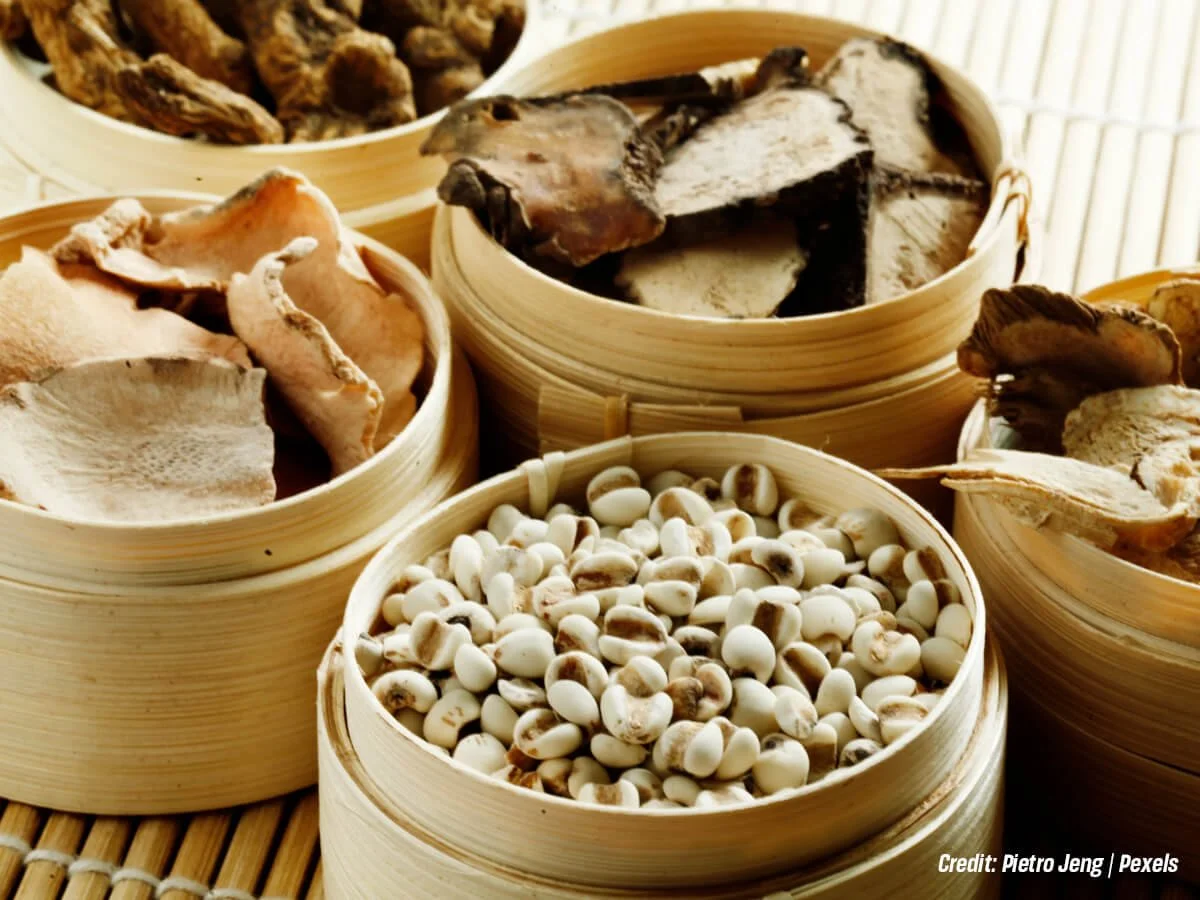
TCM utilizes a vast pharmacopeia of natural herbs. Your practitioner may prescribe a custom herbal formula designed specifically for your constitution.
Formulas rich in herbs that nourish Kidney Yin (like Rehmannia root) can help replenish the body's cooling, moistening properties.
Other herbs can be used to gently move stagnant blood, easing heavy or painful periods, or to calm the spirit (Shen) to help with brain fog and anxiety.
3. Dietary and Lifestyle Adjustments
TCM places a heavy emphasis on how we eat and live. During perimenopause, your practitioner might recommend specific dietary shifts.
Cooling Foods: If you are experiencing hot flashes, incorporating cooling foods like cucumber, watermelon, mint, and leafy greens can be beneficial, while avoiding highly spicy, greasy, or overly processed foods that generate internal heat.
Nourishing Yin: Foods like dark berries, black beans, and healthy fats help nourish Yin and Blood.
Mind-Body Practices: Integrating Tai Chi, Qi Gong, or restorative yoga can help maintain the smooth flow of Qi and manage the stress that exacerbates perimenopausal symptoms.
Take Control of Your Transition
Perimenopause is a significant chapter in a woman’s life, but it should not be a chapter defined by suffering. By understanding the biological shifts occurring within your body and looking at them through the holistic lens of Traditional Chinese Medicine, you can address the root causes of your discomfort rather than merely putting a band-aid on the symptoms. TCM empowers you to restore your internal balance, allowing you to enter your "Second Spring" feeling grounded, energized, and like yourself again.
If you are ready to naturally manage your perimenopause symptoms and reclaim your well-being, we are here to help. Contact Total Wellness Centre, a trusted TCM clinic in Toronto, at 416-532-9094 to book your consultation today.