Herbal Helpers: Demystifying the Role of Chinese Herbs in Women's Health
For thousands of years, Traditional Chinese Medicine (TCM) has relied on a vast and sophisticated herbal pharmacy to treat illness and optimize health. For women, in particular, this ancient wisdom offers a profound framework for understanding and supporting the body's natural rhythms. From menstruation to menopause, women's health is seen in TCM as a delicate dance of energy, blood, and vital substances. When this dance is disrupted, symptoms arise. Chinese herbs, rather than just masking symptoms, work to restore the body's foundational balance, addressing the root cause of the issue.
The TCM View of Women's Health
While Western medicine views women's health through the lens of hormones like estrogen and progesterone, TCM uses a different, yet complementary, set of concepts. In this model, a woman's vitality is governed by the state of her Qi (vital energy), Blood, Yin (cooling, moistening essence), and Yang (warming, activating energy).
These vital substances are managed by key organ systems, which have broader functions than their Western anatomical counterparts:
The Liver: Responsible for the smooth flow of Qi and Blood. When Liver Qi stagnates—often due to stress—it can lead to PMS, breast tenderness, irritability, and irregular or painful periods.
The Spleen: Governs digestion, transforming food into Qi and Blood. A weak Spleen can lead to fatigue, low blood volume, and issues like heavy bleeding (as the Spleen "holds" the Blood).
The Kidney: Stores the body's "Jing" or "Essence," which is the foundation for our reproductive health, vitality, and longevity. Kidney energy governs the entire menstrual cycle, fertility, and the menopausal transition.
Women's health issues are diagnosed as "patterns of disharmony" within this system. For example, painful cramps might be due to "Blood Stasis," while hot flashes are often seen as "Kidney Yin Deficiency."
Tailored Formulations: Why There's No "One-Size-Fits-All" Herb
One of the most significant differences in TCM herbalism is the rejection of a "one-size-fits-all" approach. You won't find a single "herb for menopause" in the same way you might find black cohosh on a health store shelf. This is because TCM treats the individual, not just the symptom.
Two women, both experiencing irregular periods, might receive completely different herbal formulas. One woman might be pale, fatigued, and have a light period, suggesting a "Blood Deficiency." She would receive nourishing, blood-building herbs. The other woman might be stressed, irritable, and have a period that starts and stops, indicating "Liver Qi Stagnation." She would receive herbs that smooth the Liver's flow.
Practitioners rarely prescribe a single herb. Instead, they create complex, elegant formulas where multiple herbs work in synergy. In a typical formula, there is a "chief" herb to address the main complaint, "minister" herbs to support the chief, "assistant" herbs to moderate any harsh effects, and "messenger" herbs to guide the formula to a specific part of the body. This sophisticated, personalized approach is what makes TCM herbalism both safe and highly effective.
Common Applications in Women's Health
Chinese herbal medicine can be applied to virtually every aspect of a woman's life, from her first period to her post-menopausal years.
Regulating the Menstrual Cycle
This is a cornerstone of TCM. Herbs like Dang Gui (Angelica Sinensis) are famous for their ability to both nourish and invigorate the Blood, making them invaluable for painful periods (dysmenorrhea) and amenorrhea (absent periods). Chai Hu (Bupleurum) is a "hero herb" for PMS, working to soothe the Liver Qi and ease pre-menstrual tension, bloating, and irritability.
Additionally, according to a study (Zhang et. al., 2021), “The normal rate of menstrual cycle in the TCM group was 57.58% after one menstrual cycle; 63.64% in the Western medicine group; 45.45% in the TCM group after six menstrual cycles; 21.21% in the Western medicine group; and the TCM group was better than that of the Western medicine group.”
Enhancing Fertility
TCM has a long and successful history of supporting conception. Herbal formulas are used to strengthen the Kidney essence, build a thick and nourishing uterine lining by tonifying Blood, promote healthy ovulation by supporting Yang energy, and reduce stress by calming the Liver. The goal is to create a fertile, balanced, and receptive "soil" for pregnancy to occur.
Easing the Menopausal Transition
Menopause is viewed as a natural decline in Kidney Yin and Essence. This depletion of "cooling" and "moistening" energy allows "heat" to rise, resulting in classic symptoms like hot flashes, night sweats, vaginal dryness, and anxiety. Herbs that nourish Kidney Yin, such as Shu Di Huang (Rehmannia) and Zhi Mu (Anemarrhena), can be profoundly effective at "clearing this empty heat" and managing symptoms.
Safety, Quality, and Finding a Practitioner
While these herbs are natural, they are also potent medicine. Self-prescribing based on an internet search is strongly discouraged, as the wrong herb for your specific pattern can worsen your symptoms or create new imbalances.
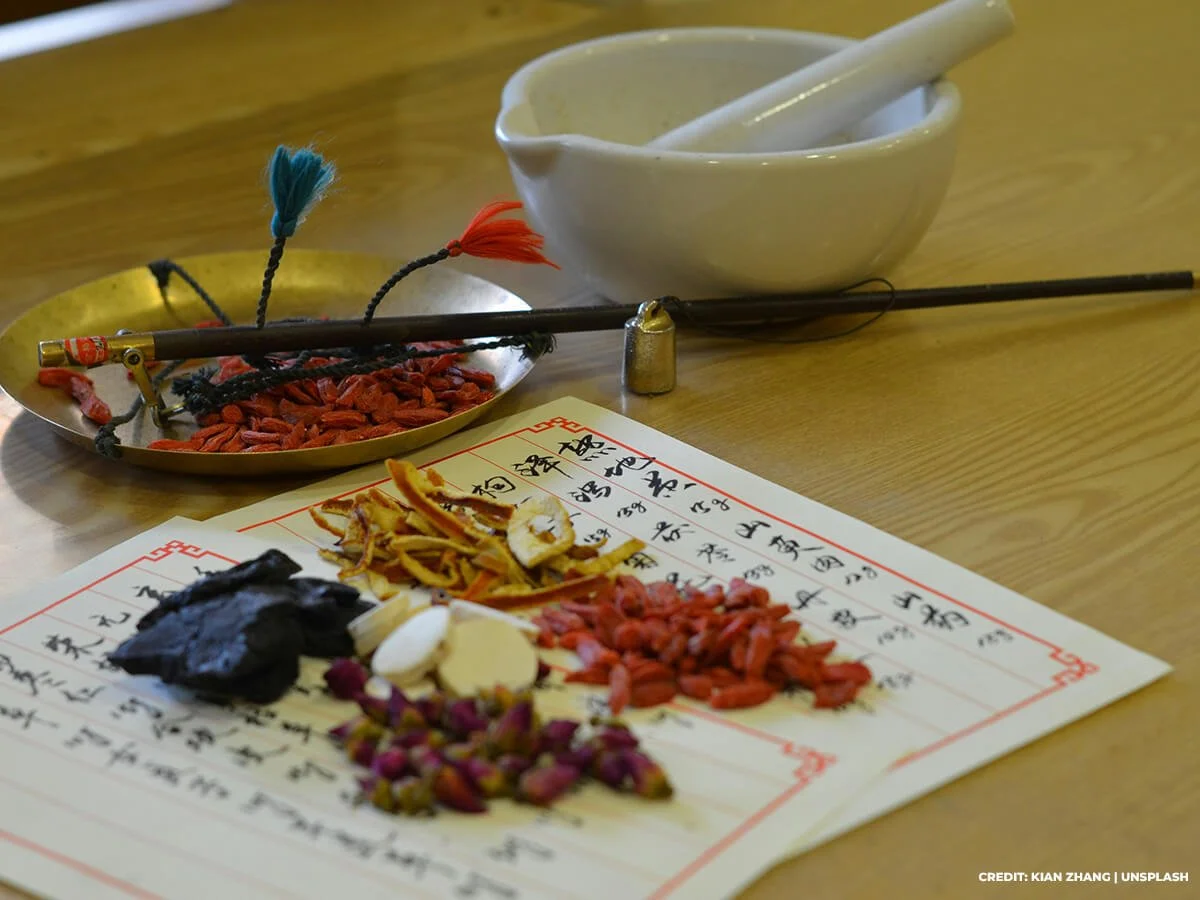
It is essential to consult a qualified and registered TCM practitioner or herbalist. They will conduct a thorough diagnostic intake—including looking at your tongue and feeling your pulse—to identify your unique pattern of disharmony. They are also trained to understand herb-drug interactions and will source professional-grade herbs that have been tested for purity, quality, and contaminants. Whether prescribed as a raw tea, a convenient granular powder, or a simple pill, these formulas are a powerful tool in your health arsenal.
Chinese herbalism offers a time-tested, holistic, and deeply personalized path to wellness. By restoring balance from within, it empowers women to move through every stage of life with greater health, vitality, and ease.
Discover how a personalized herbal strategy can support your unique health goals.
Contact Total Wellness Centre at 416-532-9094 to schedule your consultation with a registered TCM practitioner today.